
On the Friday after Thanksgiving, a shopping center in Midland fills up before the doors even open. Cars circle for stalls whose lines faded months ago. Drivers cut across the lot because the arrows on the main aisle have worn away. A pothole near the busiest entrance, harmless in August, now has a line of cars slowing down to dodge it.
None of that is bad luck. It is what a Permian Basin summer of heat, truck traffic, and sun exposure does to a lot that was never checked before the season.
Holiday traffic is the stress test every retail lot faces each year. A handful of well-chosen asphalt and striping upgrades, done in the right order, change how the whole property performs when the crowds arrive.
In this article:
- Why holiday crowds expose problems normal weeks hide
- Repairs first, paint second
- Striping upgrades that change how drivers behave
- A walkthrough before the rush: what to check on foot
- What to save for spring
- Working around open stores and busy tenants
- Get your lot ready before the first big shopping weekend
Why Holiday Crowds Expose Problems Normal Weeks Hide
Holiday shoppers use a lot differently than the weekday crowd. They arrive in waves, stay longer, and often have never parked there before.
That changes what the pavement and the paint have to do:
- Drivers circle longer looking for a stall, which means more passes over aisles and turn points
- Unfamiliar visitors depend on markings far more than regulars do
- Delivery and trash trucks keep running while pedestrians fill the same lanes
- Entrances and exits see stacked queues, so braking and turning loads concentrate in the same few tire paths
A lot can feel fine on a quiet Tuesday and still fall apart under that pattern. Small defects become real hazards when hundreds of cars hit them in a single weekend.
Repairs First, Paint Second
The most common mistake in pre-holiday prep is calling the striping crew first. Fresh paint over a failing surface looks great for a short while, then the crack underneath keeps moving and the line goes with it.
Repair the asphalt first, then stripe. Paint can only be as durable as the surface under it.
Where to focus repairs:
- Potholes near entrances, drive-thru lanes, and loading zones, where vehicles brake and turn hardest
- Cracks wide enough to hold water or debris, since moisture works down into the base
- Low spots that hold water after a rain, which create slick patches and speed up surface breakdown
- Broken or raveling edges where pavement meets curbs, drains, and driveways
Water deserves special attention. A low spot that holds water softens the base underneath, and holiday traffic then pushes the weakened surface into ruts and potholes much faster.
A proper pothole repair cuts out the damaged area and rebuilds it, rather than dropping loose material into the hole. Quick fills can pop out within weeks, right when traffic peaks. Danny’s Asphalt Paving does this work with its own crews and equipment, and a short pre-season assessment for asphalt repairs is often the fastest way to sort what can wait from what cannot.
Striping Upgrades That Change How Drivers Behave
Striping is one of the fastest ways to change how a lot behaves, because drivers follow what they see before they read any sign.
Priorities for a retail lot:
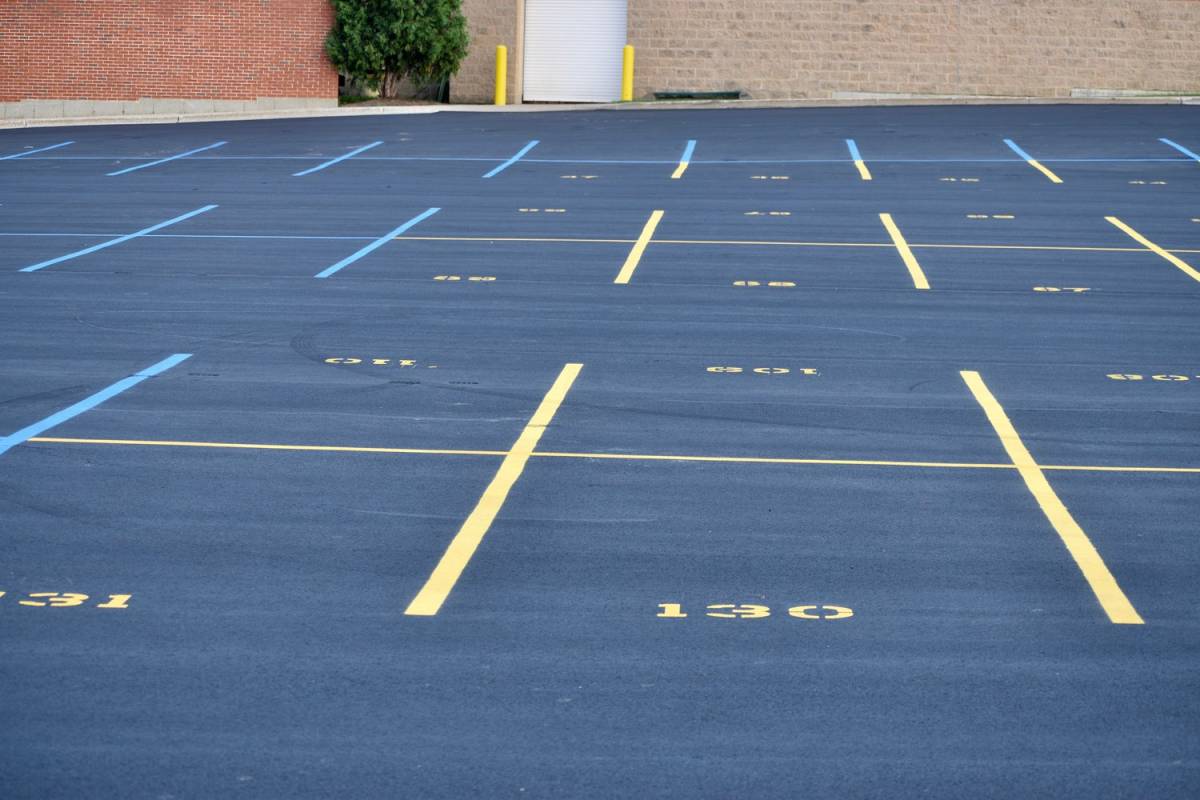
- Stall lines: crisp, full-length lines stop crooked parking, which quietly wastes more space than most managers realize
- Fire lanes and no-parking zones: visible markings give tenants and security something concrete to enforce
- Accessible stalls and access aisles: faded symbols and aisle hatching are a compliance and liability issue, not a cosmetic one
- Crosswalks and stop bars: place them where shoppers actually walk, especially from far overflow areas to the doors
- Directional arrows: restore them on main drive aisles and one-way sections so unfamiliar drivers stop guessing
Here is the counterintuitive part. More stalls is not always the goal. Squeezing lines tighter can make a lot feel crowded, slow turnover, and lead to more door dings and frustrated drivers. Clear, properly sized stalls often move more cars through in practice, even if the count on paper stays the same.
As G.W. at Danny’s Asphalt Paving explains it, a good striping plan starts with watching how people actually drive and walk through the property, then drawing the lines to match, instead of repainting whatever pattern was there before.
Danny’s offers full striping and pavement markings alongside paving, so the repair and the repaint can be scheduled as one coordinated job.
A Walkthrough Before the Rush: What to Check on Foot
Walk the lot on foot, ideally during a busy period so you see real behavior, and again at night to check visibility.
- Start at each entrance and exit and look at the first stretch of pavement, since that is where queues form
- Follow the main drive aisle to the building and note faded arrows, stop bars, and crosswalks
- Check every accessible stall and its access aisle for fading, wear, and clear signage
- Look along curbs, drains, and low areas for water staining or broken edges
- Photograph every problem with a landmark in frame so a contractor can find it quickly
Bring tenants into it if you can. Store managers know where customers complain, where delivery trucks cut corners, and where carts roll into traffic.
What to Save for Spring
Not every upgrade belongs in the holiday window. Sealcoating and larger overlay projects need dry surfaces, steady temperatures, and time to cure without traffic. West Texas winters are milder than much of the country, but cooler nights and shorter days still tighten that window, and closing large sections during peak shopping is rarely worth it.
The practical split for most shopping centers:
- Do now: crack sealing, pothole repair, edge repairs, and restriping, all of which can be done in short, targeted windows
- Plan for spring: sealcoating and larger resurfacing, when the weather is steadier and tenants can handle closures
Treating that split as a plan rather than a compromise keeps the lot safe through the holidays without forcing a rushed job.
Working Around Open Stores and Busy Tenants
Retail work has one rule: customers should barely notice it happened.
- Schedule disruptive work for overnight or early-morning hours when stores are closed
- Work in sections so entrances and the busiest stall rows stay open
- Give new paint time to dry before reopening an area, and block it off clearly
- Tell tenants early so they can warn staff and delivery partners
Danny’s runs its own crews and equipment without subcontracting, and sources mix through its sister company Basin Asphalt, so schedules are easier to tighten when a retail deadline is fixed.
Get Your Lot Ready Before the First Big Shopping Weekend
Holiday traffic exposes every weakness a lot has been hiding. Fixing the surface, restoring the markings, and timing the work around tenants gives customers a smoother, safer arrival and gives property managers fewer complaints to answer.
Danny’s Asphalt Paving has served Permian Basin property owners since 1990, from small repairs to large commercial lots. If your shopping center needs a pre-season assessment, our team can walk the property, flag what matters most, and build a plan around your tenants’ schedule. Learn more about our commercial paving work, or call (432) 563-1240 for an estimate before the first big shopping weekend.

